Food & Drink in Amsterdam
Updated · BootsnAll
Amsterdam isn't a great food destination like Paris or Florence, and nobody flies here for the Dutch home cooking. What it does have is a huge range of places to eat from every corner of the world, a handful of local snacks that are worth hunting down, and some of the best old bars in Europe. Here's what to eat, where to find it, and what to drink.
What passes for local food
Traditional Dutch food is hearty, plain winter fare, and you won't find many restaurants in the center that specialize in it. The snacks are where the Netherlands shines.
Fries
Known here as Vlaamse frites (Flemish fries), since the Belgians get the credit for them. Small fry shops are everywhere and many stay open late. The classic topping is a thick mayonnaise, and most places offer at least four or five other sauces, including curry, peanut saté sauce and, for the unimaginative, ketchup. Patat oorlog ("war fries") gets you mayo, peanut sauce and raw onions all at once. The two shops with the longest lines are Vleminckx on Voetboogstraat and Manneken Pis on Damrak; our best French fries in Amsterdam page compares them.
Herring
Raw, lightly brined herring is sold from small stands and kiosks around the city, and it's mostly locals lining up. You can eat it Dutch style, held by the tail and lowered into your mouth, or in a soft bun with onions and pickles, which is easier for a first try. Some people love it and some find it an acquired taste. Stubbe's Haring, a stand on the Singel by the Haarlemmersluis bridge a few minutes from Centraal Station, is a long-running favorite. If raw fish isn't your thing, try kibbeling, battered and fried chunks of white fish with a garlic sauce.
Pancakes
Dutch pancakes (pannenkoeken) are big and thin, somewhere between a crepe and an American pancake, and come with sweet or savory toppings such as apple, bacon, or cheese with ginger syrup. Pancake houses tend to open for lunch and stay open through dinner rather than serving breakfast. Poffertjes, tiny puffy pancakes with butter and powdered sugar, are the street-market version. More in our pancakes article.
FEBO and bar snacks
FEBO is the Dutch automat chain where you pay and pull a hot snack out of a little window in the wall. Locals will tell you it's terrible, yet most of the people eating there are locals, especially late at night after a few drinks. When we checked FEBO's store finder in September 2026 it listed 61 branches, 26 of them in Amsterdam. Order a kroket (a crisp-fried roll of meat ragout) and eat it on a slice of bread with mustard.
In bars, the snack to order is bitterballen, the bite-size round cousin of the kroket, served with mustard. Also look for ossenworst, a smoked beef sausage that's an Amsterdam specialty, and cubes of aged Gouda.
Sweet things
Stroopwafels, thin waffles glued together with caramel syrup, are best bought warm from a market stall, such as the ones at the Albert Cuyp Market. Appeltaart, a deep apple pie with whipped cream, is on the menu at most traditional cafes.
Winter dishes
From autumn on, look for stamppot (potatoes mashed with kale, sauerkraut or endive, served with smoked sausage) and erwtensoep, a split pea soup thick enough to stand a spoon in. These are what the Dutch actually cook at home.
The dish to go out of your way for: rijsttafel
The Netherlands ruled Indonesia as a colony until the 1940s, and Indonesian food became part of Dutch life. The rijsttafel (rice table) is a Dutch invention: rice with a dozen or more small Indonesian dishes, from satay and curries to pickles and sambal. It's the one meal everyone should try in Amsterdam. Plan it as a mini-splurge; at the well-known places, expect around €40 or more a person. Sama Sebo, near the Rijksmuseum, is a local favorite and gets booked up, so reserve ahead.
If you aren't that hungry, most Indonesian and Surinamese places also serve dishes a la carte, and a Surinamese broodje (sandwich) from a takeaway counter is one of the best cheap lunches in town.
Other food worth knowing about
- Chinese and East Asian: Amsterdam's small Chinatown is around Zeedijk and Nieuwmarkt, just east of the Red Light District. It has Chinese, Thai, Vietnamese, Japanese and Indonesian places side by side, and quality is generally better than the Chinese restaurants elsewhere in the center.
- Middle Eastern and Turkish: Many fry shops also sell shawarma and kebabs. Amsterdam has large Turkish and Moroccan communities, so outside the center the quality goes up.
- Argentinian steakhouses: For some reason there are lots of them around the tourist areas. They tend to be expensive and disappointing.
- Food halls: Foodhallen, in a former tram depot called De Hallen in Oud-West, has a couple of dozen stalls under one roof. It's a good pick for a group that can't agree on what to eat.
Where to eat
- Leidseplein: The small streets off the square are packed with restaurants of every kind, and the competition keeps prices reasonable. If you're staying anywhere else, come out here at least once.
- Rembrandtplein: Lots of restaurants, a few of them fancy, mixed in with the bars and clubs.
- De Pijp and the Jordaan: Where locals go for dinner. Smaller, more interesting places, and fewer menus in six languages. See our guide to the Jordaan.
- Red Light District: Fine for fries, pizza slices and late-night snacks, but not a place for a good sit-down meal.
- Damrak: The restaurants along the street from Centraal Station toward Dam Square are mostly bad. They get endless tourist foot traffic and almost no repeat customers, so they don't need to try.
Our places to eat in Amsterdam and what to eat in Amsterdam guides go further, and tipping in Amsterdam explains how much to leave (not much). Book ahead for dinner on weekends, and know that most kitchens close earlier than you might expect, often around 10 p.m.
Drink
Beer
Do you like Heineken on tap? Hope so, because the city is awash in it. Plenty of bars pour Heineken and not much else, and Heineken has owned Amstel since 1968, so a second tap doesn't mean much more choice. Beer usually comes in small glasses, often 25 cl, with a big head of foam, and you just order another.
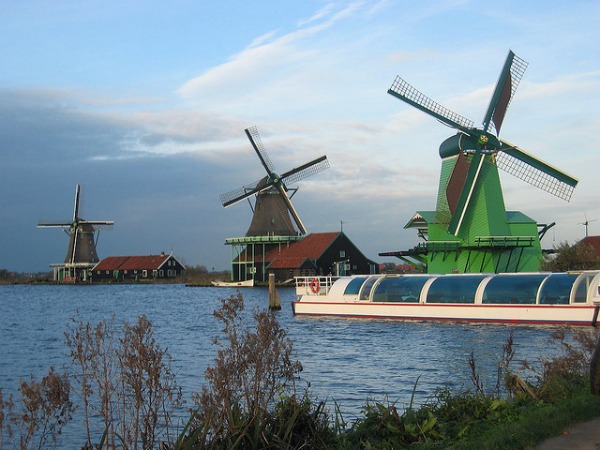
Craft beer has changed the picture a lot since this page was first written. Look for Belgian beers, which are everywhere, and for local breweries. Brouwerij 't IJ has its tasting room at Funenkade 7, right under the De Gooyer windmill in the east of the city, and its beers turn up in bars all over town.
Jenever
Dutch gin, or jenever, is the traditional spirit, served ice cold in a tulip-shaped glass filled right to the brim. The custom is to bend down and take the first sip without lifting the glass. You'll find it in any old-style bar and in the few surviving proeflokalen (tasting rooms) run by the old distillers.
Brown cafes
The bruin café, named for the tobacco-stained walls, is the classic Amsterdam bar: wood paneling, old regulars and cheap beer. Café Hoppe on the Spui has been pouring since 1670 and is a good first one to try.
Wine and cocktails
The Dutch aren't known for wine, but most bars offer a few reds and whites by the glass. Cocktails are easy to find in the Rembrandtplein and Leidseplein areas and at newer bars around the city, at prices that have climbed a lot since 2007.
Where not to drink
Drinking alcohol on the street is prohibited in the city center, with fines for nuisance running from €100 up. Drink inside or on a bar's terrace.